
Every morning, the Sun rises and brings light and warmth to our planet. It has been doing so for billions of years, long before humans or even the earliest forms of life appeared on Earth. But have you ever wondered how long the Sun will continue to shine?Like every other star in the universe, the Sun has a limited lifespan. And although its death is still billions of years away, the process that will eventually lead to it is already underway.
Why the Sun is slowly changing
According to an article published in Scientific American, the Sun generates energy through a process called nuclear fusion. Deep inside its core, hydrogen nuclei combine to form helium, releasing an enormous amount of energy.Every second, the Sun converts roughly 600 million metric tonnes of hydrogen into 596 million tonnes of helium. The remaining four million tonnes of mass are converted into energy, as explained by Albert Einstein’s famous equation, E=mc².
To put that into perspective, the energy released by the Sun in just one second is more than 600,000 times the energy humanity consumes in an entire year.But this process is also slowly changing the Sun. As hydrogen is consumed and helium builds up inside its core, the core gradually contracts and becomes hotter. This causes the Sun to shine more brightly.Scientists estimate that the Sun is now around 30 per cent brighter than it was when it formed some 4.6 billion years ago.
Earth could become uninhabitable long before the Sun dies
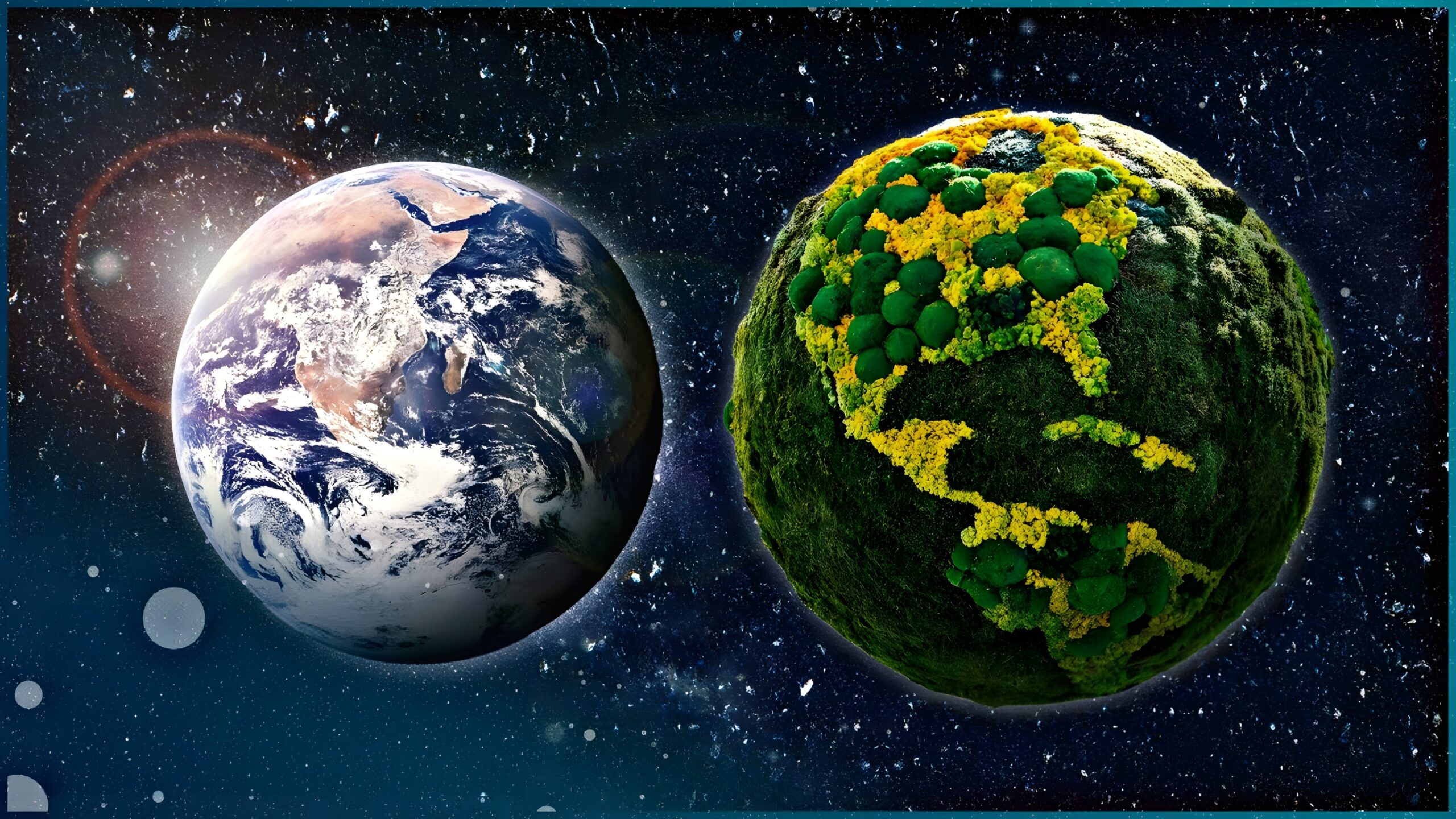
The biggest threat to life on Earth may not be the death of the Sun, but its increasing brightness.Around one billion years from now, rising temperatures could make Earth increasingly difficult to live on. As more water evaporates from the oceans, water vapour in the atmosphere could trap additional heat, making the planet even hotter.Over time, Earth could lose much of its water to space and eventually become unsuitable for life as we know it.The Sun, however, will continue to shine for billions of years after that.
The Sun will eventually become a red giant
More than six billion years from now, according to one astronomical model, the Sun will begin running out of usable hydrogen in its core.Nuclear fusion will then continue in a layer surrounding the core, causing the Sun’s outer layers to expand. It will first become what astronomers call a subgiant before growing into a red giant.During this phase, the Sun could reach nearly 170 times its current diameter and shine more than 2,000 times as brightly as it does today.
Although its surface will become cooler, its enormous size will allow it to release far more energy.Mercury is expected to be swallowed by the expanding Sun. Venus is also likely to meet a similar fate. Whether Earth will escape remains a subject of debate among scientists.Meanwhile, powerful stellar winds will carry away a significant portion of the Sun’s mass.
What happens after the red giant phase?
When the temperature at the Sun’s core reaches around 100 million degrees Celsius, it will start turning helium into carbon and oxygen.The Sun will shrink for a while, and this process will continue for about 100 million years. Once the helium in its core runs out, the Sun will begin to expand again.
Scientists call this stage the asymptotic giant branch. During this phase, the Sun could grow to nearly 200 times its current diameter.As the Sun approaches the end of its life, it will gradually lose its outer layers, releasing huge amounts of gas into space. However, unlike much larger stars, the Sun will not end its life in a supernova explosion.
The Sun’s final days
In the end, all that will remain of the Sun is a small, incredibly hot and dense core made mostly of carbon and oxygen. Scientists call this a white dwarf. It will be roughly the size of Earth, but much heavier than our planet.By this time, the Sun will be more than 12 billion years old.With no nuclear fusion to produce new energy, the white dwarf will slowly cool down and lose its brightness. After possibly trillions of years, it could become a cold, dark object known as a black dwarf. In fact, the universe is still too young for even a single black dwarf to have formed.
But what about us? Will humanity still exist when that day comes? By then, our future generations may have found another planet to call home. No one really knows what the future holds for us.While science gives us some idea of how the Sun’s story will end, what the future holds for humanity remains a mystery.