
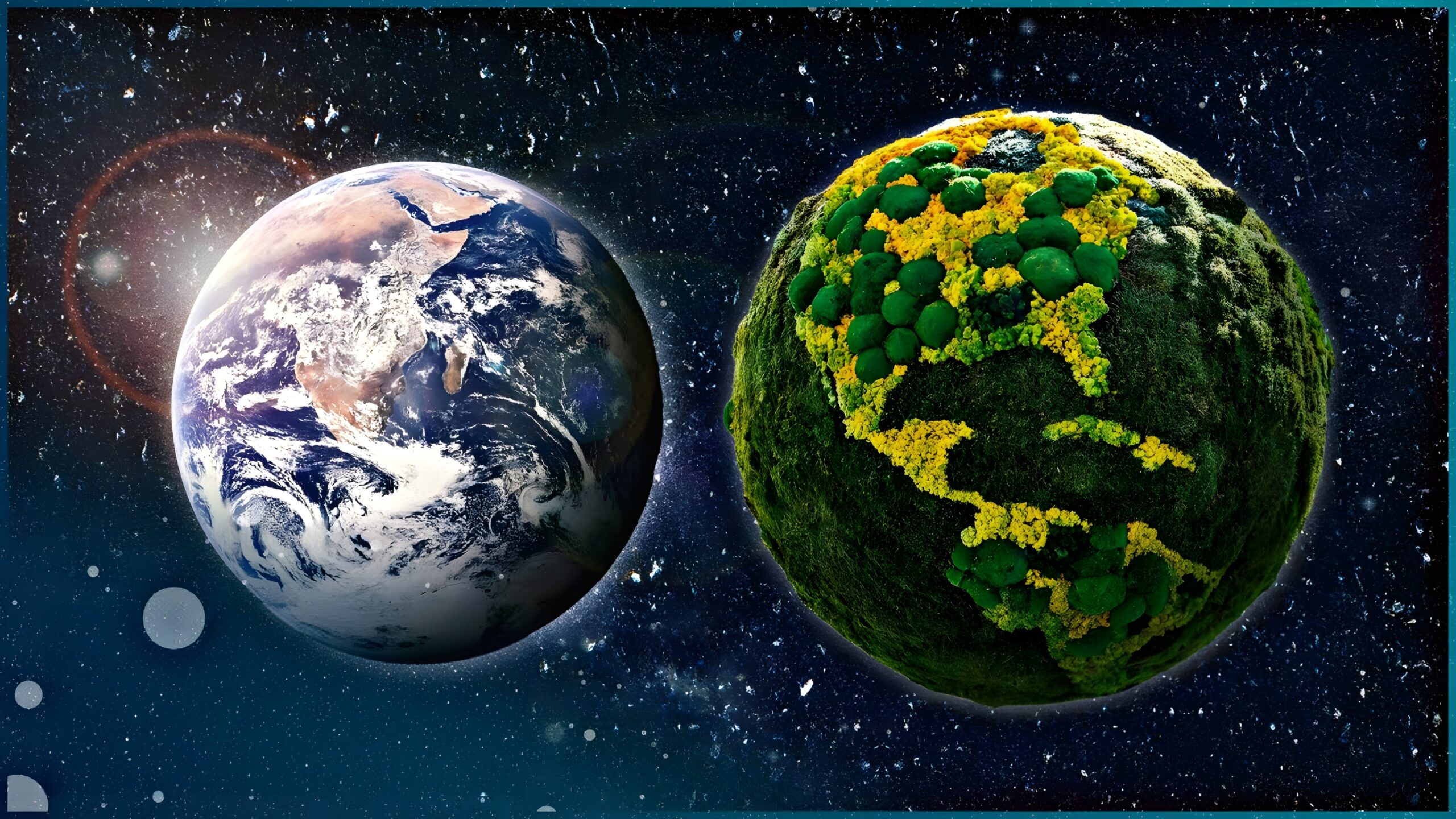
For as long as humans have studied the universe, Earth has remained the only planet known to support life. But scientists are beginning to explore an intriguing possibility: what if somewhere in space, there are planets with conditions even better suited to life than those on Earth?
It might sound like something from a science fiction movie, but the idea has been studied by astronomers for more than a decade.
These hypothetical worlds are known as superhabitable planets. They may have warmer climates, extensive shallow oceans, stable atmospheres and stars that continue shining for billions of years longer than our Sun.
Although none has been confirmed to meet all these conditions, researchers believe searching for such worlds could improve our chances of discovering life beyond Earth.
What Makes a Planet Superhabitable?
A superhabitable planet isn’t necessarily a perfect copy of Earth. In fact, scientists think some differences could make it more suitable for living organisms.
The concept gained attention in 2014 when astronomers René Heller and John Armstrong published a research paper suggesting that planets more favorable to life than Earth might exist.
Their work challenged a common assumption in astronomy: that finding another Earth should always be the main goal in the search for extraterrestrial life.
A slightly larger planet, for example, could potentially retain a thicker atmosphere and maintain suitable surface conditions for longer periods.
In a later study published in 2020, researchers described an ideal candidate as roughly 10 percent larger than Earth, up to 1.5 times its mass and slightly warmer, provided it had enough water.
The distribution of that water could be particularly important.
Imagine a world with countless islands, shallow seas and stretches of coastline. On Earth, such environments often support rich ecosystems because sunlight, water and nutrients are readily available.
Scientists believe a planet with more of these environments could potentially support greater biological diversity.
Still, these are scientific predictions based largely on what we understand about life on Earth. A larger planet or a warmer climate would not automatically make another world more habitable.
Why Scientists Are Interested in Orange Stars
Our Sun provides the energy that makes life on Earth possible. However, it may not be the ideal type of star for supporting life over extremely long periods.
Astronomers are increasingly interested in stars called K-dwarfs, which are smaller, cooler and more orange in appearance than the Sun.
Their biggest advantage is their longevity.
While the Sun has an expected main-sequence lifetime of around 10 billion years, some K-dwarf stars can continue producing energy for tens of billions of years, with certain examples potentially lasting more than 100 billion years.
That could give life on their planets much more time to develop, evolve and become complex.
There is also an interesting difference between K-dwarfs and red dwarf stars. Although red dwarfs can live even longer, many produce intense stellar activity that may threaten the atmospheres of nearby planets.
K-dwarfs could offer a more favorable balance between stellar stability and lifespan.
An Experiment That Offers a Clue About Alien Plant Life
One particularly interesting piece of research came from a laboratory experiment involving ordinary garden cress.
Astrobiologist Iva Vilović, working with Dirk Schulze-Makuch and René Heller, investigated whether organisms that rely on photosynthesis could survive under the kind of light produced by a K-dwarf star.
The researchers recreated the spectrum of an orange star using artificial lighting and compared how organisms responded to it and to simulated sunlight.
The results were encouraging.
Garden cress exposed to the simulated K-dwarf light sometimes sprouted earlier and grew taller than plants receiving simulated sunlight. Overall, however, its growth and photosynthetic efficiency were comparable under both lighting conditions.
The researchers also studied a type of cyanobacterium, which showed stronger photosynthetic performance under the simulated K-dwarf light.
Their findings, published in the International Journal of Astrobiology in 2024, suggest that photosynthesis could function under the light of these cooler stars.
That doesn’t mean alien forests have been discovered. It simply shows that the light produced by K-dwarf stars may be suitable for at least some photosynthetic organisms.
For scientists searching for signs of extraterrestrial life, that is an important clue.
Does This Mean Earth Isn’t the Best Planet for Life?
Earth has everything we currently know life needs, including liquid water, an atmosphere and an abundant source of energy.
But it hasn’t always been a comfortable place to live.
Throughout its history, Earth has experienced extreme ice ages, major volcanic activity, asteroid impacts and mass extinctions. Its climate and ecosystems have changed dramatically over billions of years.
Even the Sun, which makes life possible today, will eventually create problems for the planet.
As the Sun ages, it gradually becomes brighter. Over immense periods, this increasing energy will alter Earth’s climate and eventually threaten the conditions that allow complex life to survive.
Scientists continue to debate exactly how long Earth’s plants and other complex organisms can persist. Different climate models produce different estimates, with some newer research suggesting life could endure significantly longer than earlier predictions indicated.
A planet orbiting a stable, long-lived K-dwarf star might avoid some of these limitations and remain habitable for a much longer time.
Of course, there is an important distinction between a planet being capable of supporting life and life actually existing there.
Could These Planets Be Home to Alien Life?
The possibility is fascinating, but there is no confirmed evidence of extraterrestrial life on any planet.
A world could have oceans, suitable temperatures and a protective atmosphere without ever developing living organisms.
Scientists still don’t fully understand how life first emerged on Earth, making it difficult to predict whether similar processes would occur elsewhere.
Even so, searching for environments where life could survive gives astronomers a useful starting point.
Rather than looking only for planets that resemble Earth, researchers can examine a wider range of worlds and consider how their atmospheres, temperatures, stars and geological conditions might affect habitability.
Upcoming Space Missions Could Bring Us Closer to an Answer
Several major astronomical projects could help scientists investigate these possibilities.
The European Space Agency’s PLATO mission, currently scheduled to launch in April 2027, will search for and study planets beyond our solar system, particularly rocky worlds orbiting relatively bright stars.
Its observations could help researchers identify promising planets for future investigation.
Meanwhile, the James Webb Space Telescope is already helping astronomers study the atmospheres of distant planets.
Another major project, the Extremely Large Telescope, is being constructed in Chile. It is expected to begin its first test observations in 2029 and could eventually provide more detailed information about exoplanet atmospheres.
NASA is also developing the concept for its Habitable Worlds Observatory, a future space telescope intended to directly observe Earth-like planets and search their atmospheres for possible signs of life. The mission is being planned for the coming decades, with the 2040s discussed as a possible launch period.
These instruments won’t immediately tell us whether a distant planet is full of life. But they could help scientists recognize the environmental conditions that make life possible and identify chemical clues worth investigating.
For now, Earth remains our only confirmed living world.
Yet the possibility of a planet with warmer oceans, richer ecosystems and billions of extra years for life to evolve is a reminder that the universe may have much more to offer than we currently understand.
Perhaps the most suitable planet for life is still waiting to be discovered.